
ADT Provider Notifications
Dynamic Health IT’s TIE software helps you comply with the CMS regulation for Admission, Discharge, and Transfer (ADT) Notifications
What Are ADT Provider Notifications?
ADT provider notifications are real-time electronic alerts that tell a patient’s care team when that patient is admitted to, discharged from, or transferred within a hospital or emergency department. ADT stands for Admission, Discharge, and Transfer and refers to the core patient-movement events flowing through hospitals’ HL7 interfaces. When those events are shared with the patient’s primary care provider (PCP), specialists, and post-acute care teams, the people responsible for follow-up care learn about the encounter while it still matters: in time to schedule a follow-up visit, reconcile medications, or intervene before an avoidable readmission.
The CMS ADT Notification Requirement (Conditions of Participation)
Under the CMS Interoperability and Patient Access Final Rule (CMS-9115-F), electronic patient event notifications became a Condition of Participation (CoP), effective May 1, 2021. The requirement applies to hospitals, including psychiatric hospitals and Critical Access Hospitals (CAHs), that use an electronic medical records system or other electronic administrative system capable of generating the messages.
Covered hospitals must send an electronic notification at the time of the patient’s registration or admission (inpatient and, where applicable, the emergency department) and again at discharge or transfer. At a minimum, each notification includes the patient name, the treating practitioner, and the sending institution. Notifications must reach the patient’s established primary care practitioner or practice, any other practitioner or entity the patient has identified as responsible for their care, and post-acute care service providers when relevant.
Because this is a Condition of Participation rather than an incentive program, hospitals without a compliant solution in place risk their Medicare and Medicaid reimbursement. You can review the rule on the CMS Interoperability site.
How Dynamic Health IT Helps You Comply
Dynamic Health IT’s TIE Software monitors your HL7 ADT interface and sends ADT notifications to appropriate PCP and care managers.
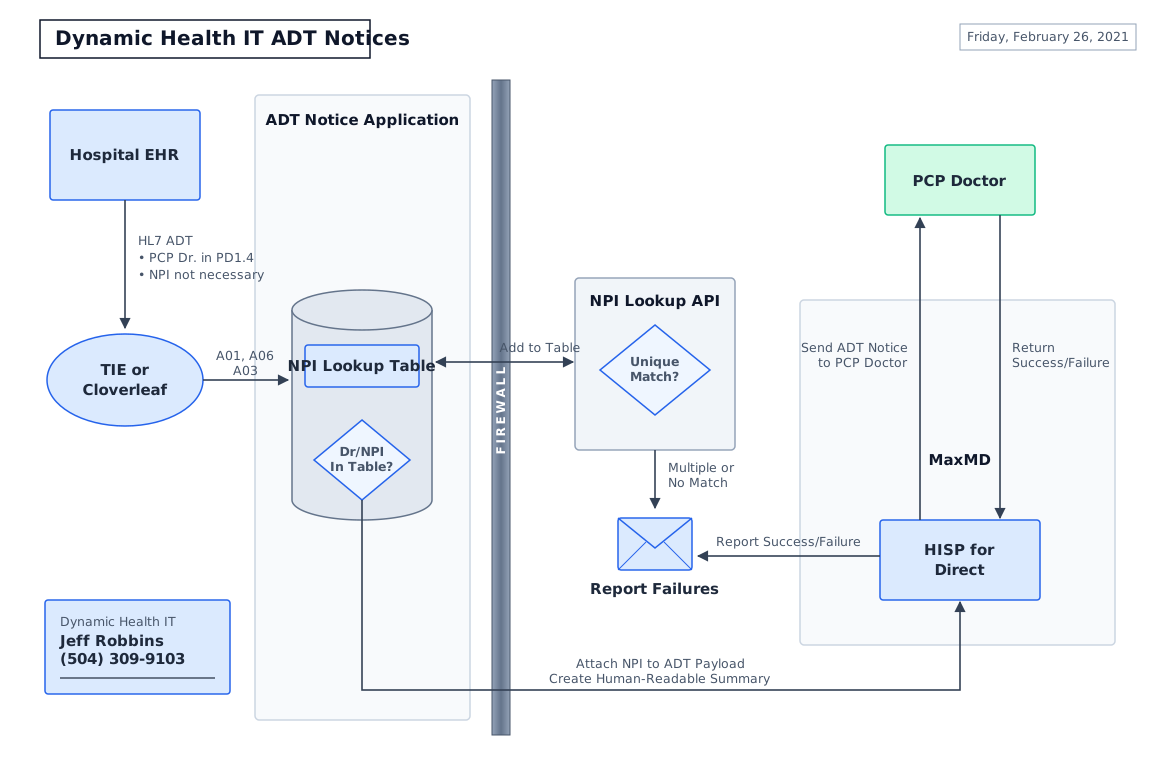
In conjunction with our partner, MaxMD, TIE sends alerts directly to the provider’s Certified EHR (CEHRT) using Direct protocol and the providers’ published Direct addresses through the recipients’ existing infrastructure. TIE converts admission/discharge and results into an acceptable format, delivering critical care information seamlessly into provider and care team workflows – no provider portal is required.

The Interface Engine is a full-featured environment for all your HL7® needs, including ADT Notifications
Technical Overview
TIE listens to the standard HL7 v2 ADT feed your hospital already produces and filters for the relevant trigger events — admissions (A01/A04), discharges (A03), and transfers (A02). For each qualifying event, TIE identifies the patient’s care team, transforms the message into a standards-based notification, and delivers it to the recipient’s Direct address, landing inside their EHR.
Why Hospitals Choose TIE for ADT Notifications
- Meets the CMS Condition of Participation for admission, discharge, and transfer notifications.
- No provider portal and no workflow change — notifications flow to the recipient’s CEHRT via Direct.
- Improves transitions of care and supports readmission-reduction efforts with timely alerts.
- Backed by a full interface engine